
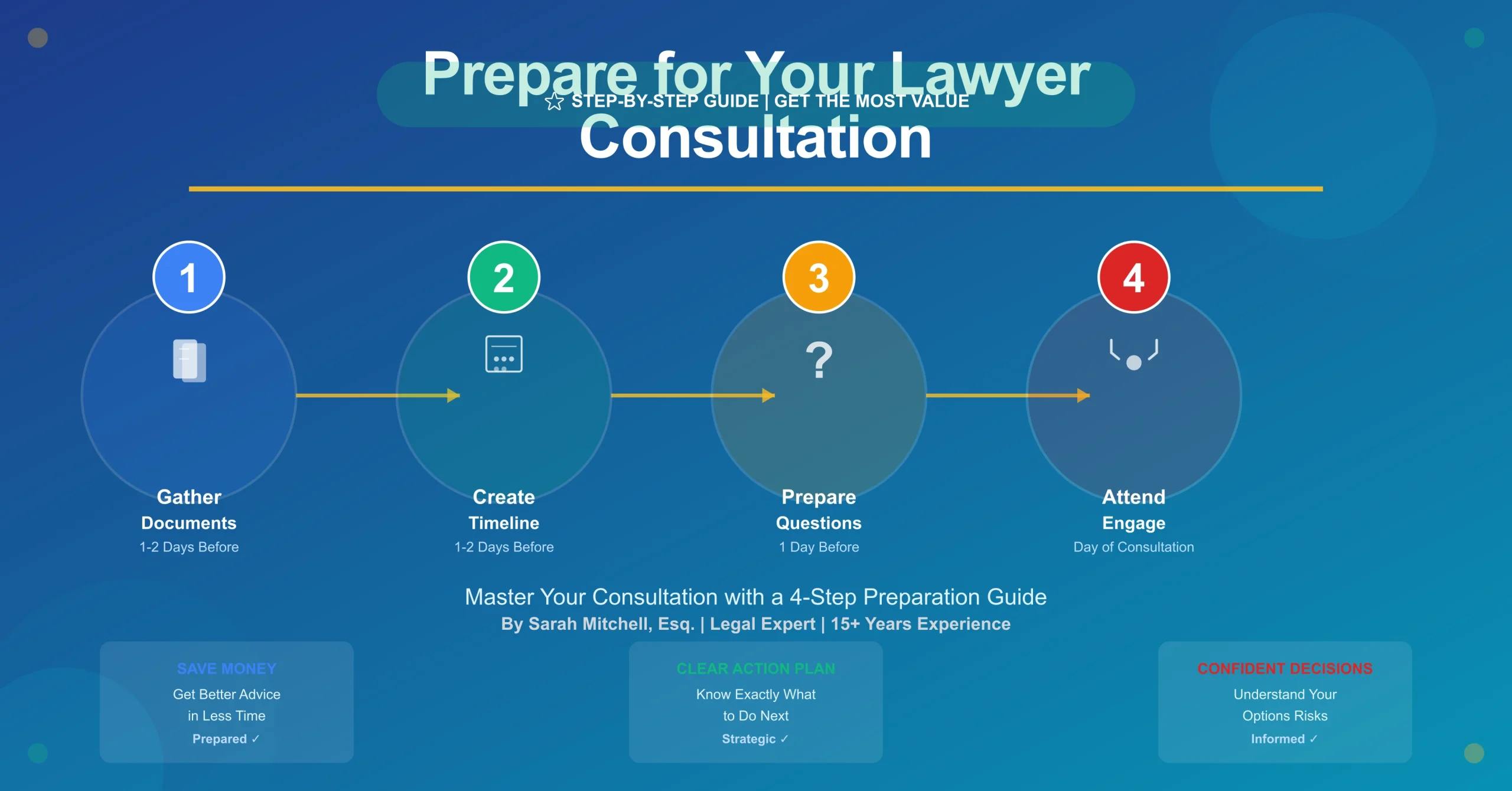
How to Prepare for a Lawyer Consultation | Step Guide
In my 15 years of legal practice, I’ve observed a critical pattern: clients who prepare thoroughly for their consultations get far more value from their attorneys’ time, receive better advice, and often save significant money. Conversely, unprepared clients often waste their consultation time gathering basic information, miss critical issues, and leave feeling confused about their options.
X Saver Pro
High-quality video, GIF, and photo downloader for X (formerly Twitter).
The truth is simple: your lawyer consultation is a business meeting, not a friendly chat. You’re paying for expertise and time. How you prepare directly impacts the quality and value of what you receive.
This guide provides a step-by-step framework for preparing for your lawyer consultation so you maximize its value, ask the right questions, and walk away with clear direction for your legal matter.
The Bottom Line
A well-prepared consultation typically yields better advice, costs less time (and thus less money), and gives you clarity about your next steps. Preparation transforms a consultation from a confused information-gathering session into a focused, strategic discussion.
Why Preparation Matters: Real Impact
Before diving into the “how,” let me share why preparation matters so much:
Real Example: Prepared vs. Unprepared
Unprepared Client: A woman came to me for an employment dispute consultation. She brought no documents, couldn’t remember exact dates, didn’t know the employment law that applied, and spent the first 30 minutes just explaining her situation. She left confused about her options and had to schedule another consultation to follow up on her questions. Total cost: $800 for two consultations with limited progress.
Prepared Client: Another client facing a similar issue brought her employment contract, paycheck stubs, email documentation, and a written timeline. She’d researched her state’s employment laws, prepared 5 specific questions, and clearly explained her situation in 5 minutes. We spent the remaining consultation time analyzing her position, identifying her best options, and creating an action plan. Total cost: $300 for one productive consultation with clear next steps.
The Difference: The prepared client spent 62% less on consultations and received significantly more useful guidance, simply through preparation.
Step 1: Gather Your Documents (1-2 Days Before)
Why Documents Matter
Documents are the foundation of legal analysis. Your attorney’s job is to review your situation and advise you. That requires understanding the facts, which documents establish. Without documents, your attorney is working from your recollection alone—which is often incomplete, sometimes inaccurate, and always less persuasive than actual evidence.
What Documents to Gather
The documents you need depend on your legal issue, but consider these categories:
1Contracts & Agreements
Gather: Any written agreements relevant to your issue
- Employment contracts or offer letters
- Lease agreements or rental contracts
- Purchase agreements or property deeds
- Loan agreements or promissory notes
- Partnership or business agreements
- Settlement agreements or court orders
- Service agreements or warranties
Why: These documents establish your legal rights and obligations. The contract language often determines the outcome of your case.
2Communication Records
Gather: Written communications relevant to your issue
- Emails (print key conversations)
- Text messages (screenshots)
- Letters or written correspondence
- Documents sent to/from the other party
- Performance reviews or disciplinary records
- Medical records or bills (if injury-related)
Why: Communications often establish what was said, who knew what when, and provide evidence of harm or wrongdoing.
Financial Records
Gather: Documents showing money involved
- Bank statements or payment records
- Invoices or bills (paid and unpaid)
- Receipts for expenses
- Tax returns (if relevant to the issue)
- Pay stubs (for employment issues)
- Mortgage or loan statements
Why: Financial records establish the damages (what you’ve lost), what you’re owed, or your financial capacity.
Prior Legal Documents
Gather: Any previous legal proceedings or correspondence
- Demand letters or cease-and-desist letters
- Court documents or filing paperwork
- Previous attorney correspondence
- Insurance claim documents
- Government agency correspondence (IRS, OSHA, etc.)
Why: Prior legal action often affects your current situation and what options are available.
Step 2: Create Your Story & Timeline (1-2 Days Before)
Why a Written Timeline Matters
Lawyers think in timelines. When did something happen? What was said at that moment? How did the situation develop? A clear timeline helps your attorney understand causation (what caused what), assess evidence, and identify missing information.
How to Create an Effective Timeline
Create a simple written timeline with three columns:
📌 Sample Timeline Format
| Date | Event | Evidence/Document |
|---|---|---|
| Jan 15, 2024 | Signed employment contract with ABC Company | Employment contract |
| March 1, 2024 | Requested accommodation for disability (email) | Email to HR manager |
| March 5, 2024 | HR acknowledged request but took no action | HR response email |
| May 10, 2024 | Terminated without cause given | Termination letter |
What to Include in Your Story
Write a 1-2 page narrative answering these questions:
- What is your legal issue? (In one sentence, if possible)
- What outcome do you want? (What would success look like?)
- What are your concerns? (What worries you about this situation?)
- What do you want to know? (What’s your biggest question?)
- What have you already done? (Have you sent demand letters? Contacted the other party? Filed anything?)
✍️ Sample Story (2 Paragraphs)
“I was hired as a project manager by ABC Company on January 15, 2024, with a written employment contract. On March 1, I requested a reasonable accommodation for my disability—specifically, to work 2 days per week from home due to a medical condition. My manager initially agreed, but the company never formalized this arrangement. On May 10, I was suddenly terminated without cause. I believe this termination is illegal under the Americans with Disabilities Act because I was fired shortly after requesting an accommodation. I want to understand if I have a legal claim and what my options are.”
Step 3: Prepare Your Questions (1 Day Before)
The Power of Good Questions
The quality of your consultation depends partly on the quality of your questions. Vague questions (“What should I do?”) produce vague answers. Specific questions produce specific, actionable guidance.
Categories of Questions to Ask
AStrength of Your Position
- Do I have a legal claim or case? (Yes/no clarity)
- How strong is my position? (Percentage likelihood of success)
- What are the risks or weaknesses in my case?
- What would the other side argue against me?
BOptions & Strategy
- What are my options? (Settlement, litigation, negotiation, other)
- What are the pros and cons of each option?
- Which option do you recommend and why?
- What’s your timeline for each option? (How long will this take?)
CCosts & Fees
- How much will this cost? (Rough estimate)
- How are you paid—hourly, flat fee, contingency, or other?
- What costs might I incur beyond attorney fees? (Court costs, expert witnesses, etc.)
- What’s your billing process? (When do I pay, how often do I get billed?)
DNext Steps
- What do I need to do next? (Actions I should take)
- What will you do next? (Actions the attorney will take)
- What’s the deadline or timeline for action?
- Do I need to hire you now, or can I take time to decide?
Step 4: Arrive Prepared & Engage Actively (During Consultation)
What to Bring
Arrive with:
- Your documents (organized in a folder)
- Your timeline (printed or written)
- Your story (1-2 page summary)
- Your questions (written list, prioritized)
- A notepad (to take notes)
- ID and payment method (bring your checkbook or card for any fees)
How to Engage During the Consultation
✓ Do This During Your Consultation
- Be concise when explaining your situation (5 minutes max)
- Listen more than you talk
- Take notes on important points
- Ask for clarification if something is unclear
- Ask follow-up questions if the attorney’s answer raises new questions
- Confirm next steps and deadlines before leaving
- Ask for a follow-up communication schedule
- Request written confirmation of advice if appropriate
⚠️ Avoid These Common Mistakes
- Don’t ramble: Stick to relevant facts, not emotional details
- Don’t argue with the attorney’s assessment: You hired them for expertise; listen to their analysis
- Don’t interrupt: Let them finish their thoughts
- Don’t assume you’ll remember everything: Take detailed notes
- Don’t leave without clarity: Ask “So my next step is…?” before you go
- Don’t be unprepared: Your unpreparededness wastes their time and your money
Questions to Ask At the End
Before you leave, ask these final questions:
- “What should I do (or not do) before we meet next?”
- “When will I hear from you next, and how will you contact me?”
- “Is there anything else I should prepare for our next meeting?”
- “What’s the next milestone or deadline I should know about?”
Beyond the Consultation: Following Up
What to Do After Your Consultation
Immediately (same day):
Review your notes while the conversation is fresh. Fill in any blanks. Identify anything you want to follow up on.
Within 24 hours:
Send the attorney a thank-you email summarizing your understanding of next steps: “Based on our meeting, I understand that [my next action] and you will [their next action] by [date]. Is this correct?”
Within 1 week:
If the attorney said they’d send documents or information, follow up if you haven’t received them.
Ongoing:
Keep all documents and correspondence organized in a folder. Document all communications (dates, who said what).
Red Flags: When to Seek a Second Opinion
If after your consultation you feel:
- The attorney didn’t listen to your concerns
- The advice seems inconsistent with your research
- The attorney pressured you to hire them immediately
- You don’t understand the advice given
- The fee structure seems unreasonably high
- The attorney was dismissive of your case
Then seek a second opinion. It’s your legal matter and your money. You should feel confident in your attorney’s advice before moving forward.
The Consultation Checklist: Print This
Brought written timeline and story summary
Brought list of questions
Brought notepad and pen
Arrived 10 minutes early
Explained situation concisely (5 minutes max)
Took detailed notes on advice and next steps
Asked for clarification on unclear points
Confirmed next steps before leaving
After Consultation:
Reviewed notes within 24 hours
Sent thank-you email confirming understanding
Completed any action items assigned to me
Conclusion: Preparation Pays Off
A lawyer consultation is not casual—it’s a strategic business meeting focused on your legal problem. How you prepare directly determines the value you receive. Clients who prepare thoroughly:
✓ Benefits of Preparation
- Get better legal advice because the attorney understands your situation clearly
- Spend less time (and thus less money) on consultations
- Identify their best options and next steps
- Understand the risks and likelihood of success
- Leave with clear direction and action items
- Make informed decisions about whether to hire the attorney
From My Experience: The most successful clients are those who treat their legal consultation like a business meeting. They prepare thoroughly, ask specific questions, listen carefully to the advice, and execute on the recommendations. These clients get better outcomes not necessarily because they have better cases, but because they’re better prepared to understand and navigate their legal situation.